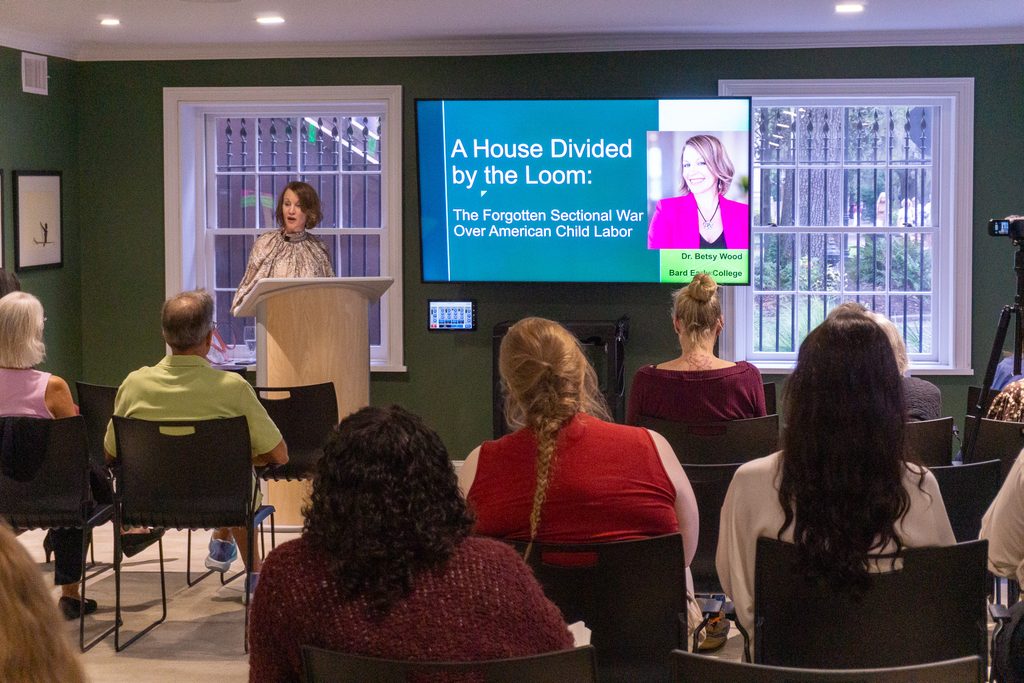
Dr. Betsy Wood Delivers Public Lecture at Juliette Gordon Low Birthplace Museum
On October 8, 2026, Dr. Betsy Wood, BHSEC Newark Professor of History, delivered a public lecture at the Juliette Gordon Low Birthplace Museum in Savannah, Georgia. The event was part of the museum’s newly launched labor history lecture series, an initiative designed to expand public engagement with scholarship on work, labor, and social change.
Drawing on research from her acclaimed book, Upon the Altar of Work: Child Labor and the Rise of a New American Sectionalism, Wood presented “A House Divided by the Loom: The Forgotten Sectional War Over American Child Labor.” The lecture explored how child labor became one of the most significant and controversial social issues in the decades following the Civil War, serving as a battleground for competing cultural values over childhood, family, labor, and government. Wood’s lecture also connected the story of child labor to the broader reform spirit of the Progressive Era and to Georgia’s own textile history, where mills frequently employed children and entire families. By linking local, regional, and national developments, she showed how debates over childhood, work, education, and government authority shaped American society long after the Civil War.
The discussion reflected the continued relevance of the issues Wood raised and provided attendees with an opportunity to engage directly with her scholarship. The evening concluded with an outdoor reception in the museum’s garden, where guests continued conversations sparked by the lecture while enjoying the historic surroundings of one of Savannah’s most significant cultural landmarks.
The successful event highlighted the important role historians play in bringing academic research to broader public audiences. Wood’s invitation to speak at the Juliette Gordon Low Birthplace Museum reflects the growing impact of her scholarship and her commitment to public history and civic engagement. The lecture offered attendees a deeper understanding of the historical forces that shaped modern debates over work, family, education, and government, demonstrating the enduring relevance of history in contemporary public life.